Postural problems associated with climbing could lead to musculoskeletal injury
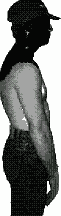
Climbers may develop a gorilla-like appearance due to the unique nature of the sport
this may lead to shoulder injuries, headaches, neck, arm and back pain
Stomach crunches or 'curls' may cause
tightness of the rectus abdominus ("6 pack")
at the expense of
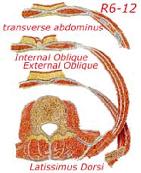
weakness of the transverse abdominis muscle
which contributes to the gorilla posture
Excessive and prolonged reaching
results in tight serratus anterior and pectoral (chest) muscles
contributing to excessive strain on the blood vessels, nerves and joints of the shoulder - neck - arm complex
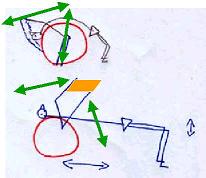
it should be noted that efficient movement in climbing involves a throwing upward movement of the arms whereby momentum (mass and energy) carries them upwards whilst the muscles perform an eccentric (muscle elongation) contraction to decelerate the limb.
trunk rotation is extemely important, where tight oblique abdominal muscles can constrain this rotation
Overhead reaching can
result in excessive strain on the back and shoulder blade muscles
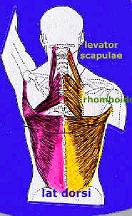
cause the rhomboids and levator scapulae to become long and weak
facilitates the latissimus dorsi to become short and strong
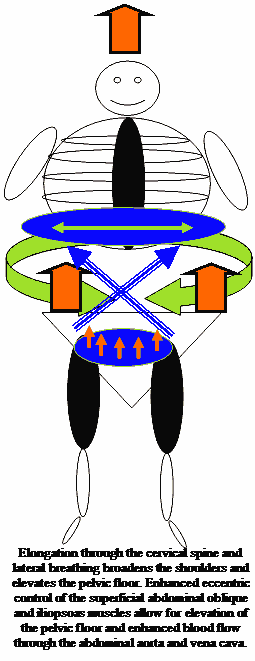
create extremely tight and overdeveloped thoracolumbar erector spinae muscle which results in reduced lateral diaphragmatic movement and alterations in gluteal-hamstring synergy through reduced core integrity
Training the shoulder blade muscles for prevention of shoulder-neck injuries
requires a strong lower trapezius muscle for good posture
needs a long and strong mid and upper trapezius muscle
eccentric rhomboids
coactivation of eccentric lats, eccentric external obliques and concentric serratus anterior
Training
the trapezius muscles requires synergistic (complimentary) action by the
latissimus dorsi
erector spinae (back)
oblique and transverse abdominal muscles (not the "6-pack"!!)
Bridging exercises
with the Swiss Gym ball and elastic tubing allows
functional activity which stretches the pectoral girdle and "6 pack"
strengthening of the abdominal, spinal and shoulder blade muscles
"Prone bridging" allows abdominal, pelvic, trunk and arm control
Working dynamic hip and pelvic control allows for the flexibility and stability needed to use the legs close to the wall, rock or cliff face.
To reduce a "poked chin" the deep neck muscles need activation
seek guidance from your physiotherapist as the ultimate aim is to improve your power-weight ratio without inducing an injury